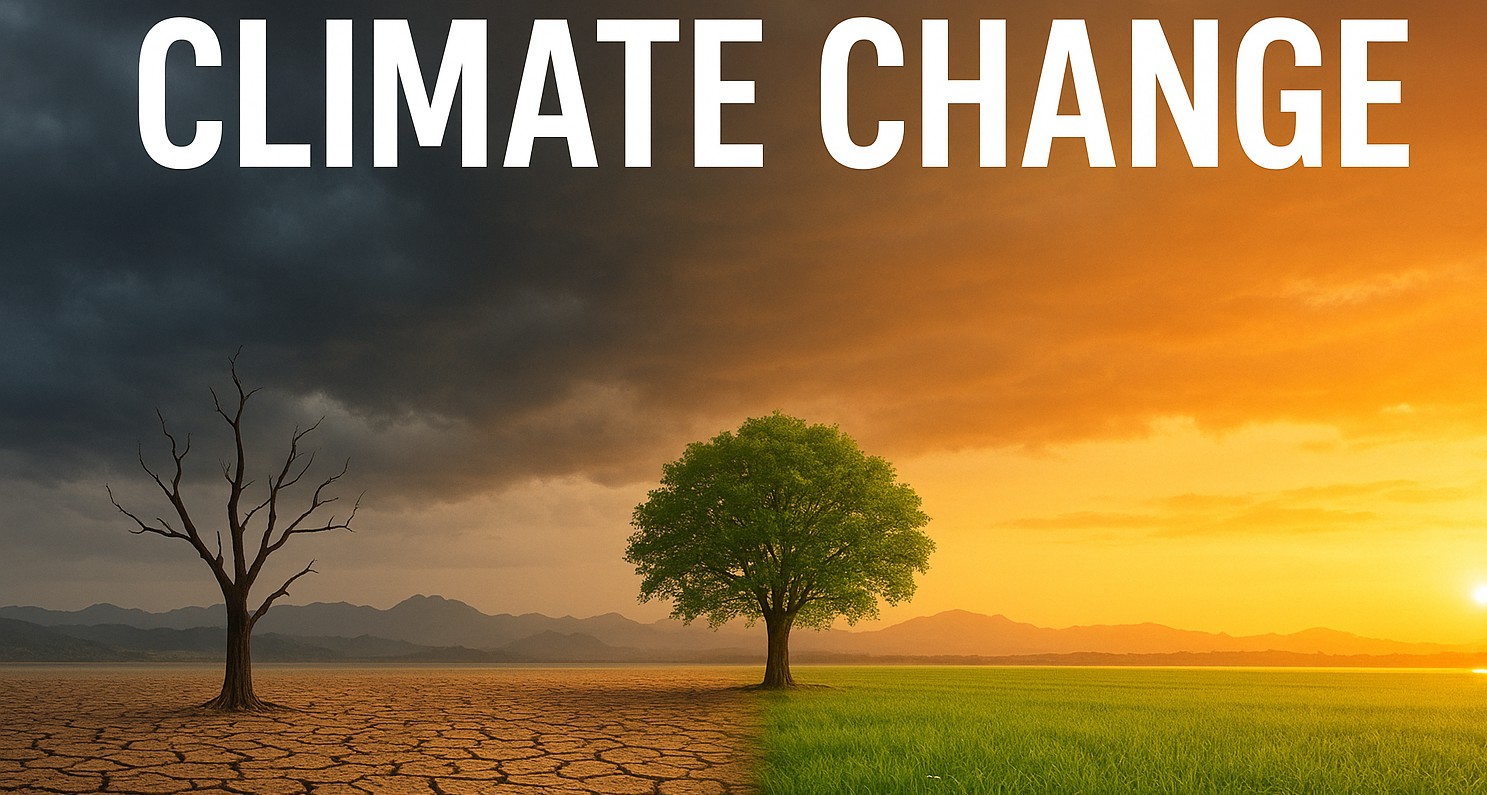
Climate change has become one of the most urgent challenges of the 21st century, threatening lives, livelihoods and ecosystems across the globe. Rising temperatures, unpredictable rainfall, melting glaciers and devastating floods are no longer distant projections but realities already affecting communities.
While the scientific evidence is clear on the causes, the question remains: how do we prevent an even greater crisis?
According to the Intergovernmental Panel on Climate Change (IPCC), human activity is the main driver of climate change. The burning of fossil fuels such as coal, oil and natural gas releases carbon dioxide (CO₂) and other greenhouse gases into the atmosphere. These gases trap heat, causing the Earth to warm.
Deforestation is another major factor. Cutting down forests for agriculture or urbanization reduces the planet’s ability to absorb carbon dioxide. Agricultural practices, industrialization, and improper waste management further contribute to methane and nitrous oxide emissions.
Dr. Jean de Dieu Niyonzima, an environmental expert in Kigali, explains: “Rwanda and other developing countries may contribute less to global emissions compared to industrialized nations, but we face some of the most severe consequences. Floods, landslides, and prolonged droughts are a direct result of changing climate patterns.”
Human stories behind the statistics
In Musanze District, 42-year-old farmer Nyiramongi Adela recounts how climate change has devastated her harvests: “Before, we could predict the seasons. Now, heavy rains come when we are supposed to plant, and drought strikes when we need rain. My family depends on the land, but each year we lose more.”
Meanwhile, Dukuze John, a fisherman from Rubavu, describes how water levels in Lake Kivu have changed: “The lake has become unpredictable. Sometimes the water rises and floods our homes, other times fish stocks disappear. Climate change is not something far away, it’s here with us.”
Experts agree that while climate change is already underway, action can reduce its worst impacts. Solutions require both global cooperation and local responsibility.
Transition to Renewable Energy Solar, wind, and hydropower can replace fossil fuels. Rwanda has already invested in solar mini grids and hydropower plants to reduce reliance on imported fuel.
Reforestation and forest protection planting trees and conserving existing forests is key to absorbing CO₂. Rwanda’s “One Tree per Child” campaign is a strong example.
Sustainable agriculture using organic fertilizers, rotating crops and adopting climate smart farming methods can reduce emissions.
Waste management recycling and composting help reduce methane emissions from landfills.
Policy and awareness governments must enforce climate friendly policies, but citizens also play a role through lifestyle changes such as reducing plastic use and saving energy.
Environmental activist Claudine Uwamahoro emphasizes: “We cannot wait for others to act for us. Every small change counts from planting trees, using public transport, to teaching our children the value of protecting nature.”
Climate change is not just an environmental issue but also a social and economic one. It threatens food security, health and the very survival of vulnerable communities. Scientists warn that without urgent action, global temperatures could rise by 1.5°C to 2°C in the coming decades, leading to irreversible damage.
However, there is hope. By combining policy reforms, community action and technological innovation, the world can slow down climate change and build resilience for the future.
As Dr. Niyonzima concludes: “The fight against climate change is a shared responsibility. Governments, businesses and individuals must work together. The future of our children depends on the decisions we make today.”
BY NIKUZE NKUSI Diane